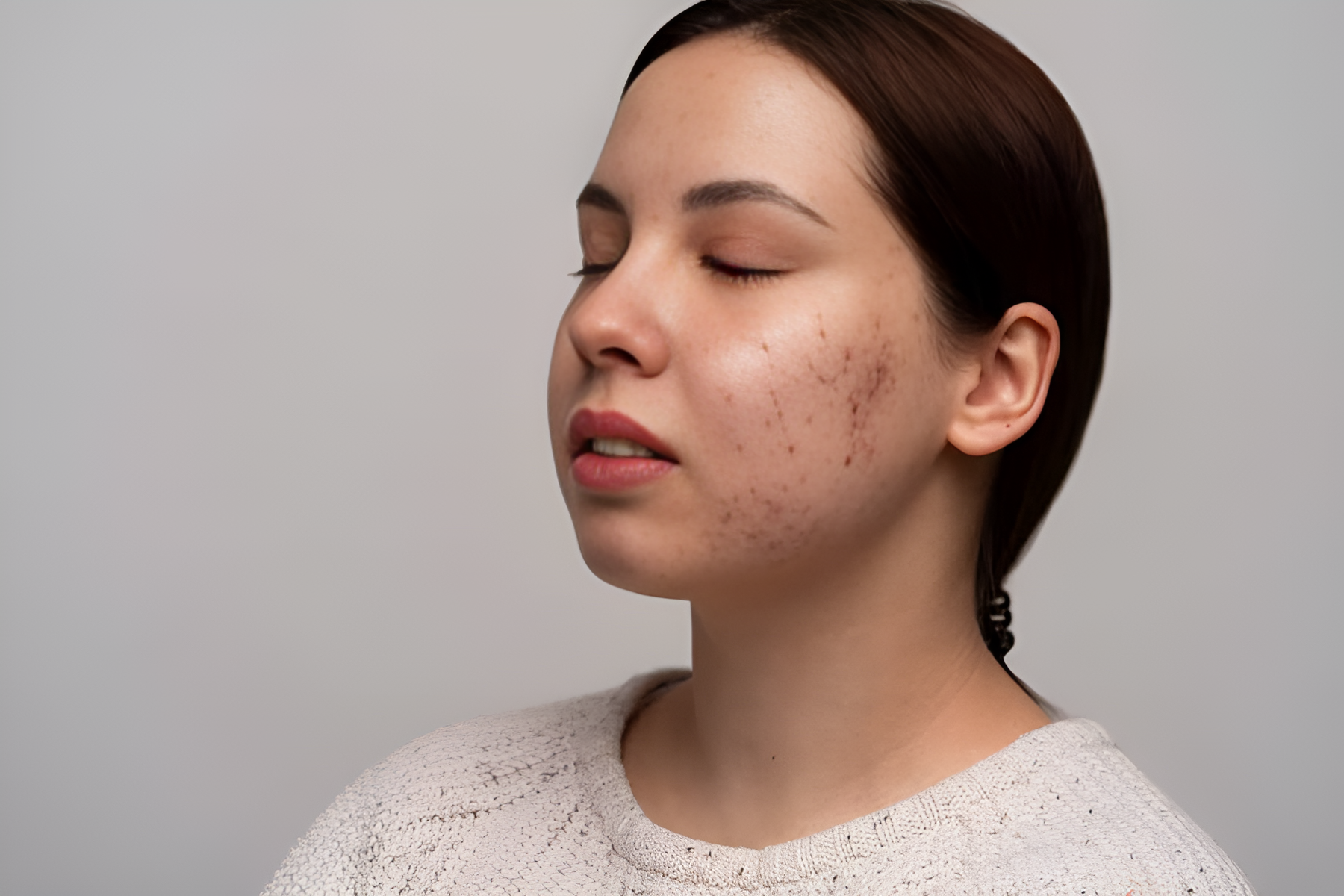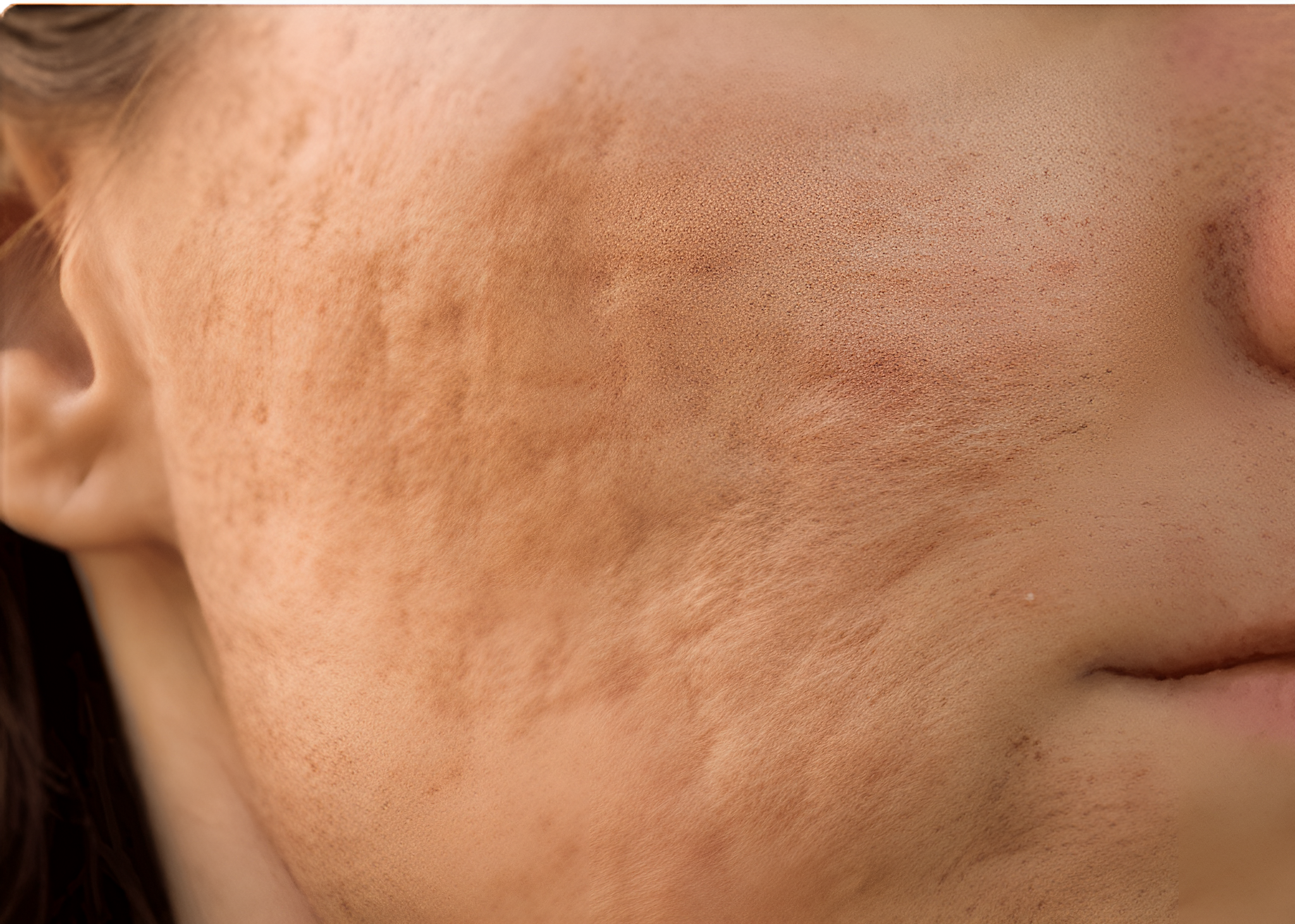



Acne scars and enlarged pores are common concerns that often share a similar underlying issue: a loss of structural support within the skin. Collagen, a key protein that gives skin its firmness and elasticity, plays a central role in skin healing and maintenance of texture.
When collagen is weakened, whether from inflammation, ageing, or external stressors, the skin may struggle to recover fully, leading to visible scarring and enlarged pores.
This article explains how collagen rebuilding supports long-term skin improvement, outlines the mechanisms involved in collagen stimulation, and describes how treatment approaches are adjusted based on scar type, pore visibility, and individual skin characteristics.
Acne Scars and Collagen Rebuilding
The following sections explain how collagen loss contributes to acne scars and how rebuilding it can improve skin texture over time.
How Collagen Loss Leads to Acne Scars
Most acne scars are atrophic, meaning they result from a net loss of collagen during the healing process. Common types include ice-pick, boxcar, and rolling scars. While these scars vary in shape and depth, they often share a similar cause: incomplete collagen repair following inflammation.
When acne becomes inflamed, the body releases enzymes that break down damaged collagen in the deeper layers of the skin. If the regeneration process doesn’t fully restore this collagen, the skin may heal unevenly, leading to visible indentations, texture changes, and shadowing.
Because the issue lies beneath the surface, improving acne scars requires stimulating new collagen formation in the dermis. Surface-level smoothing alone does not correct underlying volume loss or weakened support. Improving the appearance of scars often involves supporting collagen production in areas where it has been lost.
How Collagen Rebuilding Improves Acne Scars
Collagen rebuilding works by triggering the skin’s natural healing response through controlled stimulation. Collagen remodelling supports improvement in acne scars by activating the skin’s natural repair process. When the deeper layers of the skin are targeted, the body begins a repair process that includes inflammation, activation of fibroblasts, and new collagen synthesis.
Fibroblasts produce new collagen to replace damaged or deficient tissue. Over time, weak or disorganised collagen within scars is gradually replaced with stronger, more structured collagen fibres. This process leads to the gradual elevation of depressed scars and softening of sharp edges.
Scar improvement occurs slowly because collagen remodelling takes months. As collagen matures and reorganises, the skin surface becomes smoother and more even. The improvement is progressive rather than immediate, reflecting the biological timeline of collagen regeneration.
Ways Collagen Can Be Stimulated in Acne Scar Treatment
Collagen can be stimulated through several mechanisms that activate the skin’s natural wound-healing response in a controlled manner. These approaches differ in how they interact with the skin and in the depth at which they act within the dermis.
- Mechanical stimulation, such as microneedling, creates tiny controlled punctures in the skin. These micro-channels signal the body to begin repair and produce new collagen without the use of heat.
- Thermal stimulation, including radiofrequency-based treatments, delivers controlled heat into the dermis to promote collagen contraction and remodelling.
- Ablative resurfacing, such as fractional laser treatments, removes microscopic columns of tissue to stimulate collagen renewal during healing.
- Chemical stimulation, including selected chemical peels, promotes skin renewal by inducing controlled injury through chemical exfoliation.
Each method acts at a different depth and intensity. For this reason, no single method is suitable for all scars, and acne scar treatment selection depends on the underlying pattern and severity of collagen loss.
Enlarged Pores and Collagen Rebuilding
Understanding the relationship between collagen support and pore appearance helps explain why treatments that stimulate collagen may influence pore visibility over time.
How Collagen Loss Contributes to Enlarged Pores
Pores are openings of hair follicles and sebaceous glands, and the strength of the surrounding dermal support influences their appearance. How visible they appear depends partly on how firm and supported the surrounding skin is. Collagen helps keep the skin around each pore strong and elastic. When collagen decreases, the skin becomes less firm and less likely to spring back. As a result, pore openings can stretch and look larger, especially under gravity and repeated facial movement. Thinning dermal support also reduces the skin’s ability to maintain a smooth surface, making pores more noticeable.
Pores are a normal anatomical feature and cannot be permanently removed. However, improving dermal support may help reduce their appearance by strengthening the surrounding skin structure.
How Collagen Rebuilding Improves the Appearance of Pores
Collagen rebuilding improves pore appearance by increasing dermal thickness and support around hair follicles. As collagen density increases, the skin becomes firmer and more elastic, thereby better resisting stretching at the pore openings.
Increased elasticity may improve the skin’s ability to recoil, thereby influencing the visibility of pores. Additionally, a smoother dermal surface improves how light reflects across the skin, making pores less visually prominent.
Pore improvement is usually a secondary effect of collagen rebuilding rather than an immediate outcome. As collagen develops and stabilises over time, the surrounding skin gains better structural support, which can make pores appear less prominent and the overall texture look smoother.
Matching Collagen Stimulation to Skin Damage
The depth of collagen loss plays a key role in selecting the right stimulation method.
Superficial collagen loss may present as uneven texture or mildly enlarged pores. These changes often respond to gentler treatments that target the upper dermis.
In contrast, rolling and boxcar scars involve deeper dermal damage, requiring more intensive collagen induction to rebuild support beneath the skin.
This deeper tissue damage often calls for:
- More intensive or combined collagen stimulation methods
- A staged treatment plan
- Longer recovery and remodelling timelines
Tailoring the depth of treatment to the extent of damage helps maximise results while maintaining safety.
Factors That Affect Collagen Rebuilding Outcomes
The response to collagen turnover varies between individuals and depends on several biological and practical factors. Understanding these variables helps explain why outcomes differ and why treatment plans are often tailored.
- Scar type and depth: Deeper scars, such as rolling or boxcar types, involve structural changes in the deeper dermis. These scars generally require more collagen remodelling than shallow surface irregularities.
- Skin type and pigmentation risk: Darker or more reactive skin may require gentler treatments and longer intervals between sessions to reduce the risk of post-inflammatory hyperpigmentation (PIH).
- Age and baseline collagen levels: As we age, natural collagen production slows down, which can affect how quickly and effectively the skin responds to treatment.
- Sun exposure and lifestyle factors: Ongoing ultraviolet exposure, smoking, and chronic inflammation may interfere with healing and influence how the skin responds during treatment.
Treatment spacing and aftercare also influence outcomes. Allowing time for adequate healing and following post-treatment guidance supports collagen maturation, whereas closely spaced sessions or inconsistent aftercare may reduce the extent of improvement.
Collagen Preservation and Maintenance
Once improvement has been achieved, preserving collagen becomes important for long-term stability. The body constantly renews and breaks down collagen as part of normal ageing, and levels may decline over time if contributing factors are not managed.
Key maintenance principles include:
- Sun protection, to reduce ultraviolet-related collagen breakdown
- Acne control, to reduce repeated inflammatory stress on the skin
- Gentle skincare habits, to minimise chronic irritation and low-grade inflammation
Without these measures, newly formed collagen may weaken over time due to ongoing UV exposure, inflammation, and natural ageing. Long-term habits, such as consistent sun protection and gentle skincare, are generally safer and more sustainable than repeated high-intensity treatments, which may increase risk.
What Collagen Rebuilding Can and Cannot Do
Collagen rebuilding plays an important role in improving skin structure, but its effects have limitations.
Collagen rebuilding can:
- Improve the depth of atrophic scars
- Smooth uneven skin texture
- Reduce the visibility of enlarged pores
Collagen rebuilding cannot erase acne scars completely and permanently eliminate pores.
For this reason, treatment planning focuses on improvement rather than perfection. Setting realistic expectations supports safer treatment decisions and long-term satisfaction, while avoiding unnecessary or overly aggressive interventions.
Quick Answers to Common Questions (Mini-FAQ)
Does collagen rebuilding remove acne scars completely?
No. It improves the appearance of scars by strengthening the skin’s structure over time.
Can collagen rebuilding shrink pores permanently?
It can reduce their appearance, but does not eliminate pores.
How long does collagen improvement take?
Visible changes may develop gradually over several weeks to months.
Do results last forever?
Maintenance is needed, as collagen naturally declines with age and UV exposure.
Is collagen rebuilding suitable for all skin types?
Yes, when methods are selected and performed appropriately.