

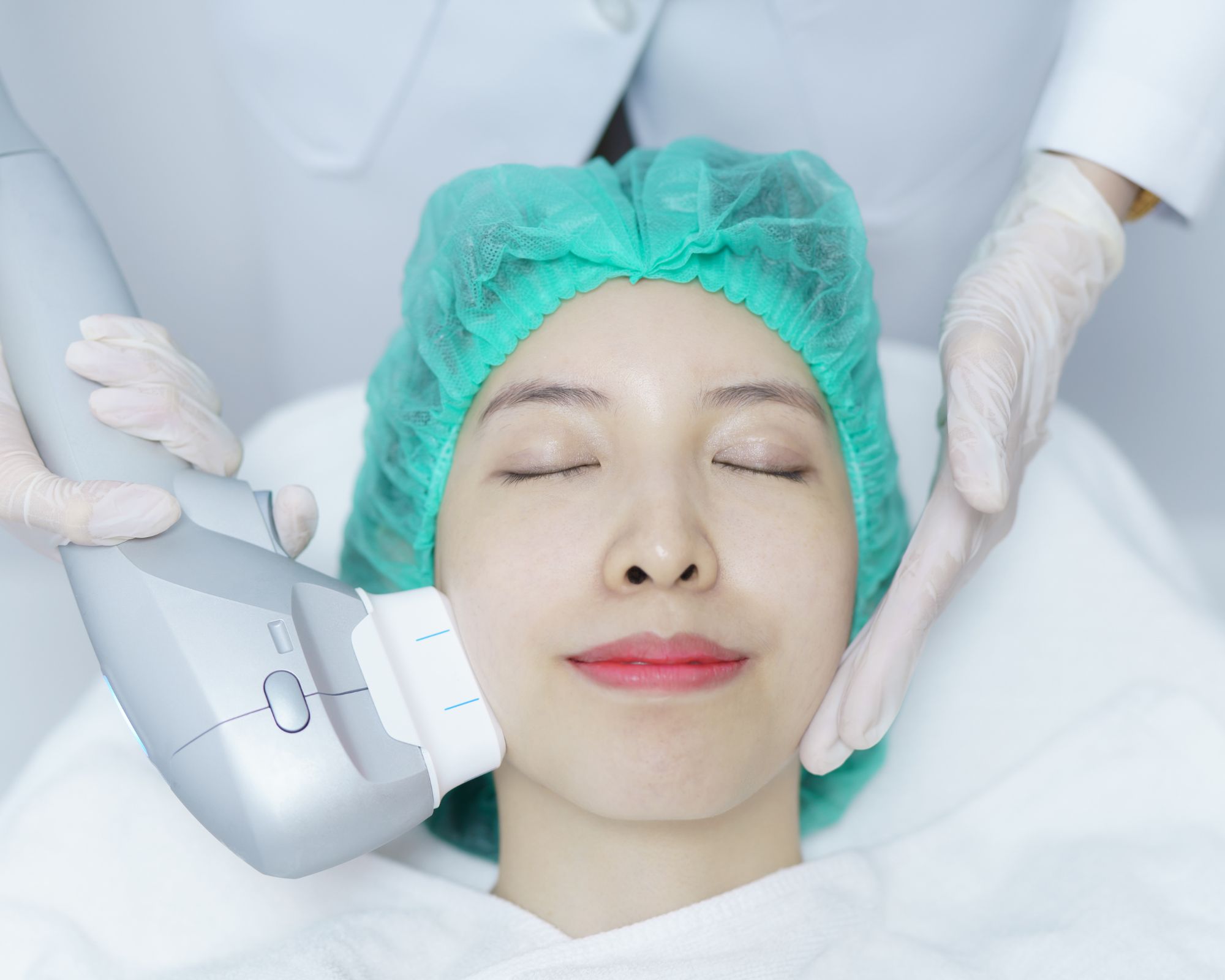
HIFU and surgical facelifts target age-related changes, but they cater to different needs.HIFU (High-Intensity Focused Ultrasound) is a non-invasive option that uses ultrasound energy to stimulate collagen and support skin tightening. Surgical facelifts, on the other hand, involve making incisions on the skin surface to address loose skin or reposition facial tissues, with changes that are visible soon after surgery.
Why Compare These Treatments?
HIFU may be considered by individuals looking for gradual changes and shorter recovery times, while surgical facelifts may provide more pronounced changes that can last for several years. Both are approaches used to address age-related changes, but they differ in method and may suit different preferences and expectations.
What is HIFU?
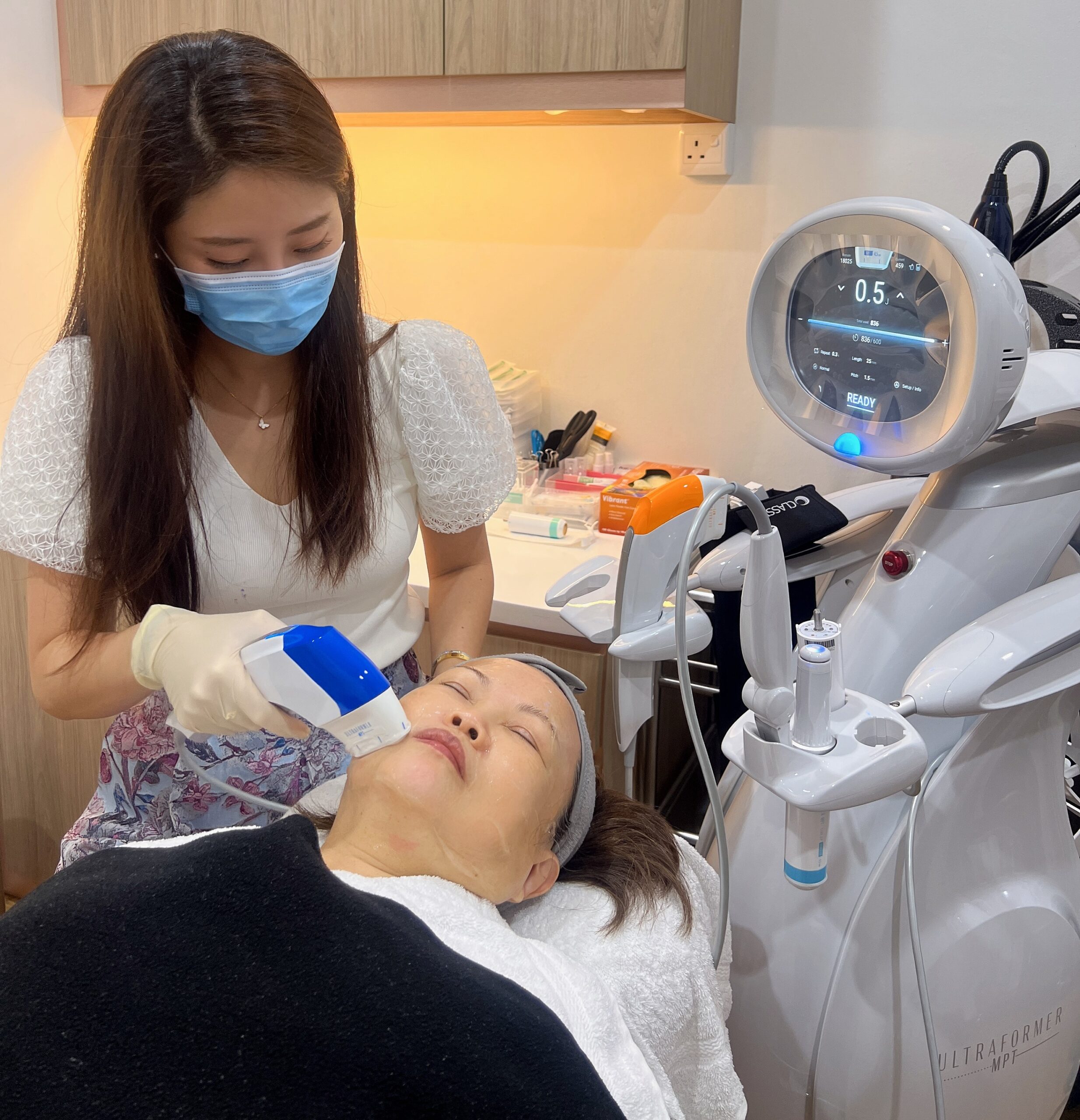
High-intensity focused ultrasound (HIFU) is a non-invasive procedure that may be used to address age-related skin changes. It works by delivering ultrasound energy into deeper layers of the skin, which may support tightening in the treated area. For readers who want a broader explanation of how HIFU works and when it may be suitable, this guide to HIFU offers a useful starting point.
A HIFU facelift targets deeper skin layers, including those addressed in surgical facelifts. These ultrasound waves stimulate collagen and elastin production and reduce facial fat to reduce a double chin. It also works by gradually tightening the skin layer and improving its elasticity over time. Most individuals are able to resume normal activities shortly after treatment, though some temporary discomfort or mild side effects can occur.
If you are considering this option further, HIFU treatment for lifting and skin tightening may be worth exploring. The treatment page gives more detail on benefits, target areas, and what to expect during the process.
What is a Surgical Facelift?
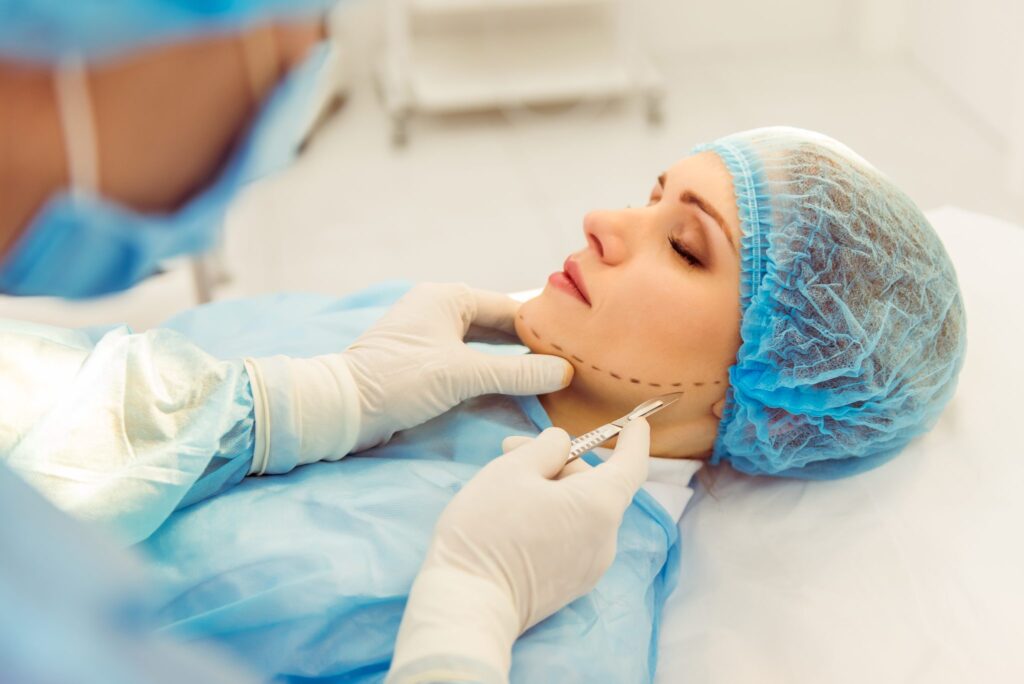
A surgical facelift, or rhytidectomy, is a procedure that involves making incisions in the skin. This procedure helps reduce visible signs of ageing in the face and neck. Its primary purpose is to address sagging skin, deep wrinkles, and loss of facial contour, providing a more youthful, rejuvenated appearance, though outcomes can vary among individuals.
Purpose
- To tighten sagging skin and muscles.
- To reduce deep wrinkles, particularly around the nose, mouth, and chin.
- To restore facial volume and definition to the jawline and neck lift.
General Procedure
- Preparation: The facelift surgery procedure begins with either general anaesthesia or intravenous sedation.
- Incisions: The surgeon makes strategic incisions, typically around the hairline, behind the ears, and in some areas under the chin for neck contouring.
- Tissue Adjustment: The underlying muscles and tissues on the facial skin are tightened, and excess skin is removed or repositioned to achieve a smoother, firmer appearance.
- Closure: The surface incisions are carefully closed with sutures or skin adhesives to minimise scarring.
- Recovery: Post-procedure, patients experience swelling and bruising, which are common, with full recovery taking several weeks.
A surgical facelift may provide longer-lasting changes compared to non-invasive approaches. The choice of treatment should always be guided by consultation with a qualified professional.
HIFU vs Surgical Facelift: Key Differences
The table below compares HIFU treatment and facelift surgery to help you decide which option fits your needs appropriately.
| Factor | HIFU | Facelift Surgery |
|---|---|---|
| Procedure Type | Non-invasive treatment | Invasive surgical procedure |
| Cost | Lower (varies by clinic, typically SGD 800–SGD 3,000) | Higher (ranges from SGD 10,000–SGD 25,000+) |
| Downtime | Minimal (may involve mild redness/swelling) | Significant (2–4 weeks recovery period) |
| Longevity of Results | Temporary (6 months to 2 years) | Long-lasting (8–10 years or more) |
| Target Audience | Individuals seeking subtle, non-surgical and gradual results | Those looking for dramatic, immediate results |
| Effectiveness | Moderate (ideal for mild to moderate laxity) | High (addresses severe skin laxity effectively) |
| Recovery | No recovery time needed | Requires post-surgery care and rest |
Benefits of HIFU and Surgical Facelift
The table below highlights general differences between HIFU treatment and facelift surgery. These points are for information only and may vary depending on individual factors.
| Benefit | HIFU Procedure | Facelift Surgery |
|---|---|---|
| Non-Invasive | No incisions or needles are required | Not applicable (surgical procedure) |
| Treatment Approach | Gradual changes may be observed over weeks to months | Changes may be visible soon after surgery |
| Downtime | Changes may last several years, though the duration varies between individuals | Recovery may take several weeks |
| Collagen Stimulation | Ultrasound energy may support collagen and elastin production | Not applicable (focuses on repositioning tissue) |
| Duration of Effects | Changes may last several years, though the duration varies between individuals | Effects may last 6 months to 2 years, depending on maintenance and individual factors |
| Treatment Areas | Can be applied to areas such as the jawline, cheeks, and neck | Addresses the entire face and neck |
| Suitability | May be less suited for more severe laxity or significant fat loss | Often considered for more advanced changes in skin laxity |
| Skin Texture | May support improvements in firmness and skin texture | Primarily addresses sagging or loose skin |
Can You Combine HIFU and a Facelift?
Depending on individual needs, HIFU treatment and facelift surgery may sometimes be considered together. A facelift involves removing extra skin and tightening facial tissues, with changes that are visible soon after surgery. HIFU, which stimulates collagen production, may be used afterwards to support skin firmness over time. If you are considering HIFU as part of a longer-term treatment plan, it may also help to review common HIFU side effects and what to expect after treatment.
Advantages of Combining HIFU treatment and a Facelift surgery:
- Enhanced Longevity: HIFU may support skin firmness following surgery by stimulating collagen production.
- Improved Skin Quality: HIFU may support skin texture and firmness, complementing the structural adjustments made during a facelift.
- Non-Invasive Maintenance: HIFU may provide a less invasive way to support surgical changes over time.
- Targeted Rejuvenation: HIFU can address smaller areas or concerns not fully resolved by surgery, like fine lines or skin laxity in specific zones.
Combining these treatments requires careful planning and assessment with a qualified professional, who can determine suitability and timing on a case-by-case basis.
Can HIFU Replace a Facelift?
HIFU and surgical facelifts serve different purposes, and suitability depends on factors such as age, skin condition, and the degree of skin laxity.
- Severity of Sagging: HIFU may be considered for mild to moderate skin laxity. Surgical facelifts are generally considered when skin laxity is more pronounced.
- Age: Younger individuals (often in their 30s to 50s) may consider HIFU for early changes or as part of a maintenance approach. Older individuals with more advanced changes may be advised to explore surgical options.
- Skin Condition: HIFU may support skin firmness and elasticity, but may be less suited for addressing deep wrinkles or changes in facial contour, where surgery might be considered.
HIFU may be considered earlier in the ageing process, while surgical facelifts are generally used for more advanced changes. They are not direct substitutes for one another.
Conclusion
The comparison between HIFU and facelift highlights that both approaches address different needs and expectations. HIFU is a non-invasive treatment that may support gradual changes using ultrasound energy, and it may be considered for younger individuals or those with mild skin laxity. A facelift, in contrast, is a surgical option that may be used for more advanced age-related changes, and its effects may last longer than non-surgical approaches. Consulting with a professional can help assess individual circumstances and guide discussions on which option—or combination of options—may be suitable.